

When you decide to renovate a commercial space, your mind likely jumps straight to the construction phase. You might think about the sound of hammers, the smell of fresh paint, and the sight of new furniture arriving. However, the most significant financial decisions happen much earlier than the first day on site. In fact, the majority of your final Fit Out Costs are determined while the project is still just a set of drawings on a computer screen. Every line a designer draws and every material they suggest carries a price tag that will manifest later in the process.
I have seen many business owners treat the design phase as a purely creative exercise. They focus on the brand colors and the trendy layouts without realizing that these choices are hard-wiring the final bill. If you want to keep your spending under control, you must understand that design is not just about looks; it is about logistics, engineering, and compliance. By the time a contractor gives you a quote, about eighty percent of the spending has already been “locked in” by the design decisions made weeks prior. If you wait until construction starts to worry about the numbers, you are usually too late to make a real difference.
Strategic Planning to Control Your Fit Out Costs
The layout of your office is the biggest variable in your financial planning. A common mistake is assuming that all layouts of the same square footage cost the same to build. This is far from the truth. A layout with many small, private offices requires significantly more materials and labor than an open-plan design. Every additional wall means more studs, more gypsum, more paint, and more doors. However, the walls themselves are often the cheapest part of the equation.
How Space Planning Dictates Total Fit Out Costs
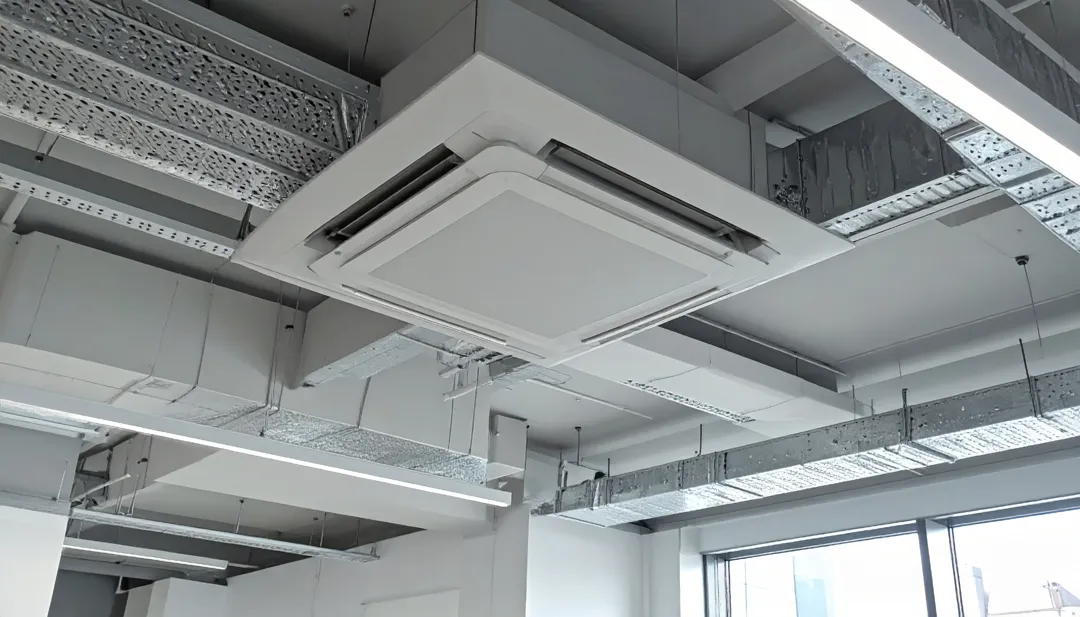
The real expense of a complex layout lies in the “invisible” services. When you add a wall, you are not just adding a partition. You are creating a new zone that needs its own light switches, electrical outlets, and air conditioning vents. In a place like Kuwait, where cooling is a massive priority, every new room requires a modification to the HVAC ducting to ensure proper airflow. If your design creates ten small rooms instead of five large ones, you might double the amount of technical work required for the ceiling services. This complexity is a primary driver of high Fit Out Costs. I suggest keeping the layout as simple as possible. Use glass partitions or modular furniture to create privacy without needing to move the heavy infrastructure of the building.
Selecting Materials that Manage Your Long-term Fit Out Costs
Material selection is another area where early decisions have a massive impact. It is very easy to get carried away with high-end finishes that look beautiful in a catalog but carry a heavy price. There is always a balance between the initial purchase price and the long-term value of a material. Sometimes, spending a little more at the start can actually save you money over the life of the project.
The Impact of Flooring and Wall Finishes on Fit Out Costs
Consider the flooring. A basic carpet tile might be cheap to buy, but if it wears out in two years because of high foot traffic, you will end up paying for it twice. On the other hand, choosing a premium marble for a back-office area where clients never go is a waste of resources. I always advise my clients to spend their money where it has the most impact. Invest in high-quality materials for the reception area and client meeting rooms, but use more cost-effective, durable options for the internal staff areas. This “weighted” approach to design allows you to maintain a premium feel without inflating your total Fit Out Costs unnecessarily.
Engineering and Mechanical Decisions
The mechanical, electrical, and plumbing (MEP) systems are often the most expensive part of a commercial project. In many cases, they can account for forty to fifty percent of the total budget. Decisions made during the early engineering phase regarding these systems will stay with you for the duration of the project.
Lighting and Electrical Choices and Their Effect on Fit Out Costs
Lighting design is a perfect example. A design that calls for hundreds of small recessed spotlights will be much more expensive to install than a design that uses a few high-quality linear fixtures. Each spotlight requires its own wiring and a hole cut into the ceiling. Furthermore, the type of lighting you choose will impact your Ministry of Electricity and Water (MEW) load calculations. If your design exceeds the building’s allocated power capacity, you might have to pay for expensive infrastructure upgrades. By choosing energy-efficient LED systems and keeping the wiring paths logical, you can keep these technical Fit Out Costs within a reasonable range.
Why Compliance Checks at the Start Save on Total Fit Out Costs
In Kuwait, skipping the compliance check during the design phase is a recipe for a financial disaster. Every project must follow the rules set by the Kuwait Municipality and the Kuwait Fire Force (KFF). If a designer creates a beautiful layout that blocks a fire exit or uses materials that do not have the correct fire-rating certificates, the authorities will reject the plans.
If you discover these issues during construction, the cost of fixing them is much higher than the cost of getting it right on paper. I have seen projects where half-finished walls had to be torn down because they were in the wrong place according to the KFF safety code. This results in wasted materials, double labor costs, and a delayed opening date. A professional design team will perform a compliance audit at the very beginning. By ensuring the design follows all local regulations from day one, you avoid the “rework” fees that often cause Fit Out Costs to spiral out of control.
Managing the Timeline to Avoid Hidden Fees
Time is an often-overlooked factor in design. A design that relies on custom-made furniture or imported materials from Europe or America might look unique, but it adds a layer of risk to your schedule. If a shipment is delayed, your contractors might be sitting idle on site, yet you still have to pay for their time and the rent on the empty space.
When you are in the design phase, ask about the lead times for every major item. If a specific tile takes twelve weeks to arrive but your project needs to be finished in ten, that design choice is impossible. I recommend looking for local suppliers or items that are kept in stock whenever possible. This reduces the risk of delays and helps you avoid the “rush fees” that suppliers charge for urgent orders. Keeping your timeline predictable is one of the most effective ways to manage your overall Fit Out Costs.
Conclusion
The secret to a successful renovation is realizing that your budget is managed on the drawing board, not just on the construction site. Every decision about the layout, the materials, and the technical systems has a ripple effect on your bank account. By being involved in the early design stages and asking the right questions about complexity and compliance, you can steer your project toward a successful and affordable conclusion. A beautiful office does not have to be an expensive one if the design is smart, efficient, and well-planned. Treat the design phase as your primary opportunity to save money, and the construction phase will be much less stressful.
If you are planning a new office or retail space, working with an experienced team can help you avoid the common design pitfalls that lead to high costs. We focus on creating functional, beautiful spaces that respect your budget and follow all local regulations.