

The fitness industry in Kuwait is experiencing a significant transformation. Modern members no longer look for just a collection of weights and treadmills. Instead, they seek a motivational environment that supports their health goals while providing a sense of community. Consequently, the physical design of the facility is just as important as the equipment it houses. A successful Gym & Fitness Center Fit-Out requires a deep understanding of human movement, safety regulations, and technical infrastructure.
When you start a fitness project, you are building more than a business. You are creating a space where people push their physical limits. Therefore, the environment must be durable enough to withstand heavy use while remaining inviting and safe. This guide explores the essential practices that ensure your facility is functional, profitable, and inspiring for every member.
Strategic Planning for Your Gym & Fitness Center Fit-Out
A common mistake in fitness design is placing equipment wherever there is open space. This leads to bottlenecks and safety hazards. Specifically, a professional plan begins with zoning. You must understand how members move from one exercise to another. By creating a logical flow, you reduce frustration and improve the overall user experience.
Defining High-Intensity and Recovery Areas
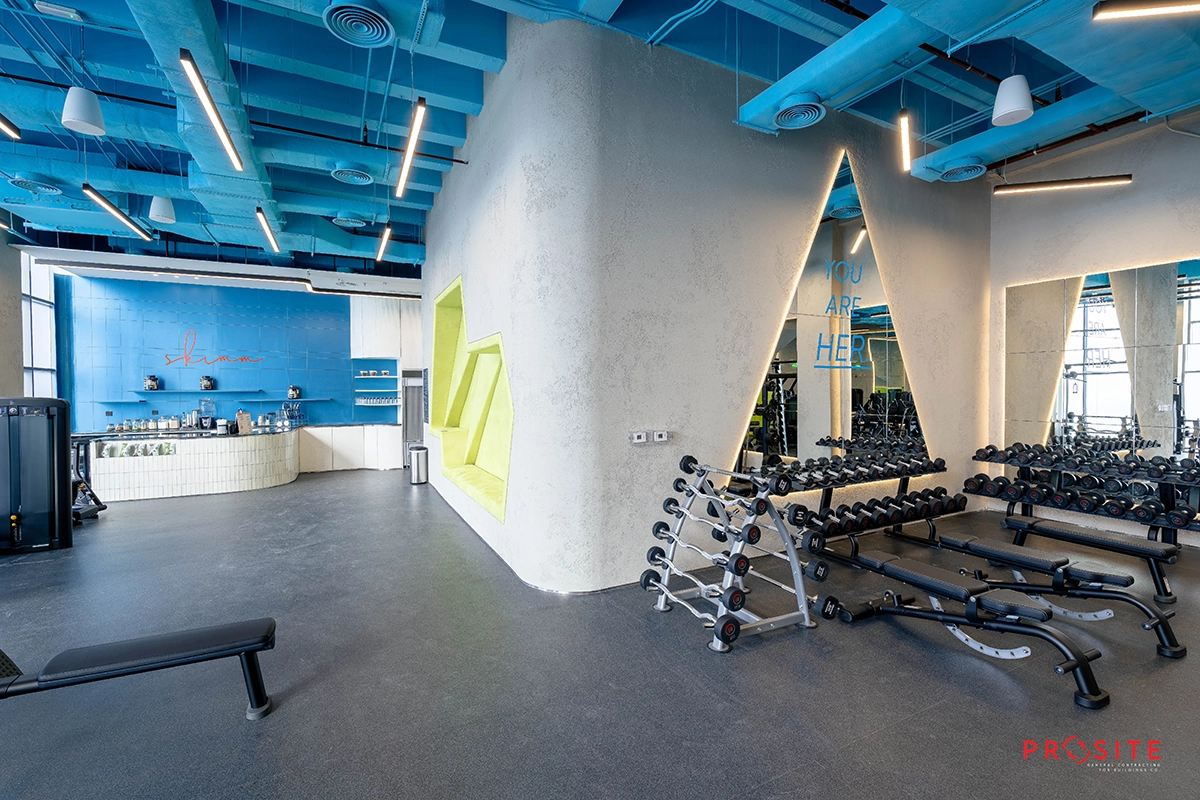
In a comprehensive Gym & Fitness Center Fit-Out, you should separate high-energy zones from quiet areas. For instance, the heavy weightlifting section should not be directly next to a yoga studio or a stretching area. Specifically, the noise and vibration from dropped weights can disrupt a mindfulness class. Furthermore, you should place cardio machines near windows or areas with high air circulation. This helps members stay cool during intense workouts.
Ensuring Safe Clearances
Safety is the most critical part of any fitness facility. Specifically, you must leave enough space between machines to allow for safe movement. If a member is performing a lateral raise with dumbbells, they should not be in danger of hitting someone on a nearby treadmill. Therefore, following international safety standards for equipment spacing is essential. In addition to preventing accidents, proper spacing makes the gym feel more spacious and high-profile.
Essential Flooring Standards in Gym & Fitness Center Fit-Out
The floor is the most used part of any gym. It must support thousands of kilograms of equipment while protecting the subfloor and the joints of your members. Specifically, choosing the wrong material can lead to structural damage and increased injury risks.
High-Impact Rubber Solutions
For areas dedicated to free weights and power racks, thick rubber flooring is necessary. Specifically, this material absorbs the shock of dropped plates and reduces the noise that travels through the building. Furthermore, rubber is easy to clean and naturally slip-resistant. Consequently, it is the standard choice for strength training zones.
Specialized Turf and Studio Floors
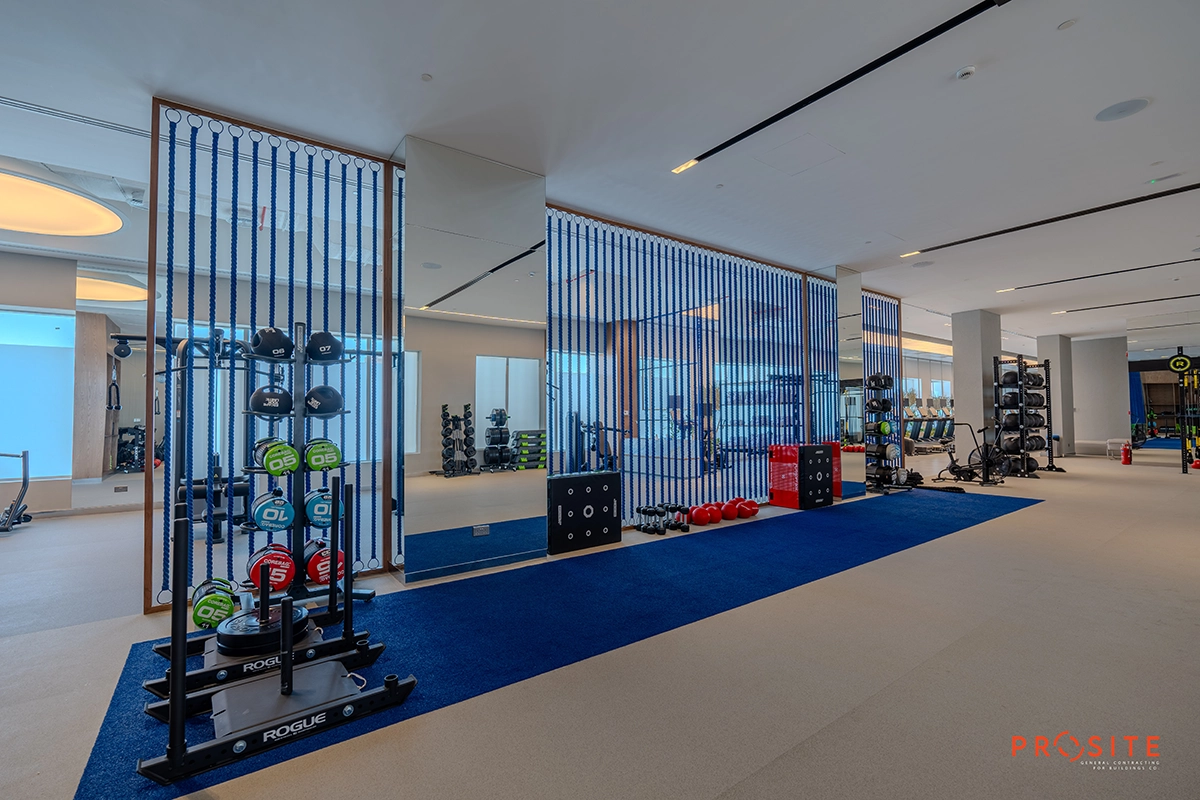
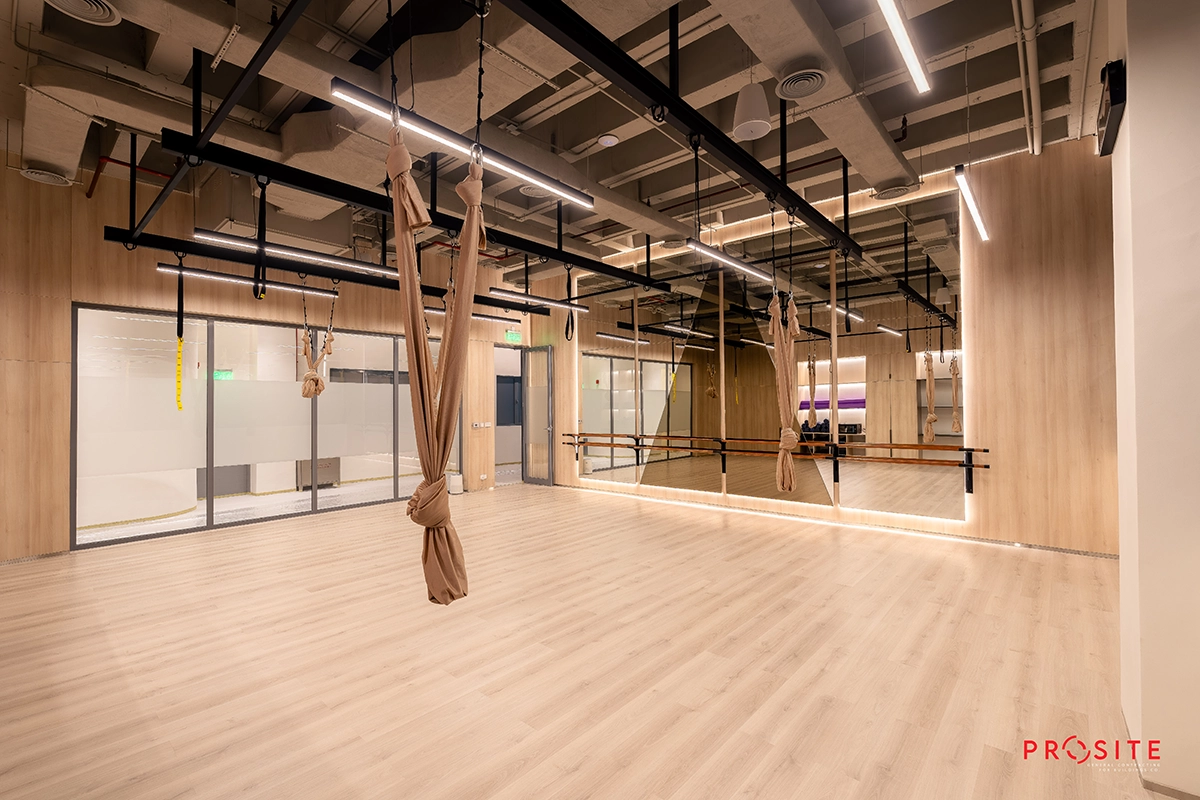
Functional training zones often require synthetic turf for sled pulls and sprint work. Specifically, the turf must be high-density to prevent it from bunching up under pressure. For group exercise studios, sprung wooden floors or high-grade vinyl are better options. These materials provide the necessary cushioning to protect knees and ankles during high-impact movements.
Technical Infrastructure and Environment Control
A gym is a high-load environment. From the electrical needs of a row of treadmills to the massive requirements of the cooling system, the internal systems are vital.
Ventilation Needs for a Gym & Fitness Center Fit-Out
In the climate of Kuwait, the air conditioning system is the heart of the gym. Specifically, a fitness center requires much higher air exchange rates than a standard office. When many people are breathing heavily and sweating, the air becomes humid and stale very quickly. Therefore, your Gym & Fitness Center Fit-Out must include a robust HVAC system that introduces fresh filtered air constantly. Furthermore, specialized exhaust systems should be installed in locker rooms and shower areas to prevent the buildup of moisture and odors.
Managing Sound and Vibration
A gym is naturally a loud place. The sound of music and clanking weights can easily become overwhelming. Specifically, if the noise levels are not managed, it can lead to a stressful environment for members and complaints from neighbors. Vibration-isolation mounts for heavy equipment are often necessary if the gym is on an upper floor. Furthermore, acoustic wall panels and ceiling baffles can help soak up the echo in large, open spaces.
Aesthetics and Member Experience
The look of your gym tells a story about your brand. Specifically, it should motivate your members the moment they walk in.
Strategic Lighting and Mirrors
Avoid using standard, flickering office lights. Instead, use a mix of ambient and task lighting. Specifically, cool white light is better for high-energy areas as it keeps people alert. For yoga or recovery zones, warm dimmable lights are preferred. Furthermore, mirrors are a staple of a Gym & Fitness Center Fit-Out. They are not just for vanity; they help members monitor their form. However, you must place them strategically to avoid glare from the overhead lights.
Conclusion
A successful Gym & Fitness Center Fit-Out is a combination of engineering, safety, and psychology. By focusing on the flow of the space, the quality of the flooring, and the efficiency of the technical systems, you build a facility that stands the test of time. In a competitive market like Kuwait, the gyms that thrive are those that prioritize the comfort and safety of their members. Specifically, when you invest in a professional environment, you are investing in the health of your community and the longevity of your brand.
Are you ready to build a fitness destination that stands out?